


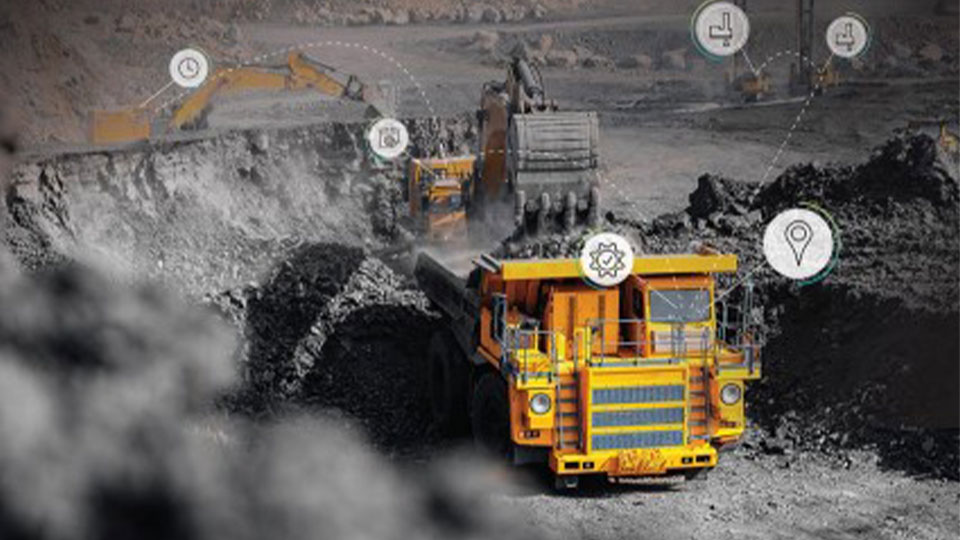
The CEO of Dareh Anjir Mining Company stated that productivity in mines no longer merely means increasing extraction volume, saying: “The smart use of modern technologies to reduce costs, increase efficiency, and minimize environmental impacts is among the most important priorities of mining. Through the application of new technologies, these goals can be largely achieved, strengthening mining activities in line with higher value creation and optimal productivity.”
According to the Public Relations Department of Dareh Anjir Asiatic Cheetah Mining and Exploration Company, Seyed Masoud Azimi, CEO of the company, described smart mining in Iran, in a written note, as an evolving outlook accompanied by long-term objectives as well as operational challenges.
In this regard, he added: “The government and sovereign institutions such as IMIDRO have developed a roadmap based on which, through the application of modern technologies, growth rates in the mining sector are expected to increase significantly and ultimately generate greater value added for the country.”
Emphasizing that in today’s era productivity in mining is no longer defined solely by increased extraction volumes, Azimi said: “The intelligent use of modern technologies to reduce costs, enhance efficiency, and mitigate environmental impacts is among the most important priorities of mining. By leveraging new technologies, these objectives can be achieved to a great extent, thereby reinforcing mining activities toward higher value creation and sustainable productivity.”
Smart Mining Productivity
Continuing his remarks, the CEO of Dareh Anjir Mining Company described the concept of ‘smart mining productivity’ as a key term highlighting the necessity of technology adoption and a deeper understanding of the advantages of utilizing modern knowledge in mining. He stressed that achieving smart productivity goals depends on employing a set of key technologies such as artificial intelligence, the Internet of Things (IoT), autonomous systems, remote sensing, and drone technologies, which must be taken into serious consideration by industry stakeholders.
He noted that, in reality, smart productivity—through the collection and processing of real-time operational data, the use of electronic control systems to reduce errors, the digital interconnection of various mining units, and the monitoring of carbon emissions via smart sensors and software—leads to economic production. In this sense, a mine is no longer merely an extraction site, but rather a smart production system capable of elevating productivity to an advanced level.
Azimi cited increased productivity, enhanced safety, and reduced resource waste as major benefits of smart mining processes, noting: “Estimates show that smartization can increase labor productivity by up to 40 percent and reduce operating costs by around 20 percent.”
He went on to identify the various challenges along the path toward smart mining as key concerns for sustainable development, stating: “Financial constraints, shortages of skilled and technical human resources, inadequate digital infrastructure, and resistance to change are among the challenges facing the smartization of mines in Iran.”
The CEO of Dareh Anjir Asiatic Cheetah Mining and Exploration Company emphasized that smart productivity in mining cannot be achieved merely by installing a few sensors. He said: “Smart mining requires a comprehensive transformation in management, human resources, and operational processes. Despite existing challenges, this path is a strategic necessity for enhancing competitiveness, safety, and sustainability in Iran’s mining industry.”
The Path to Achieving Smart Mining Outcomes
Azimi described a strategic, step-by-step approach as essential for success and achieving major outcomes in the smart mining process. He stated that establishing Integrated Smart Operations Management (ISOM) systems, collecting real-time data through IoT sensors, and setting up Integrated Remote Operations Centers (IROC) are among the key steps toward achieving smart mining objectives.
He characterized smart mining as a paradigm shift in how natural resources and their role in sustainable development are perceived, explaining: “Smart productivity essentially means creating a balance between economic profitability, environmental protection, and the enhancement of social quality of life. This multidimensional perspective transforms mines from raw resource sites into complex and intelligent systems capable of shaping the future of the steel industry through a green and sustainable approach.”
Stressing that the path toward smart mining is a national strategic route capable of elevating Iran’s position in the global economy while simultaneously addressing environmental and social concerns, the CEO of Dareh Anjir noted: “To achieve this goal, a set of policies and executive measures must be placed on the agenda to ensure this path is pursued in a sustainable and effective manner. The first step in this journey is macro-level policymaking.”
The Role of Government in Smart Mining
Azimi emphasized that government stakeholders must consider smart mining as a national priority within industrial and economic development plans. He stated: “Developing a national roadmap for smart mines, along with legal and regulatory support, can significantly smooth the way forward.”
He added that incentives should also be provided to encourage private sector investment in this field, so that high initial costs do not hinder progress and private investors are motivated to enter this domain.
Azimi described investment in digital infrastructure as the second critical step toward smart mining in Iran, saying: “Smart mining is not possible without digital infrastructure. Expanding high-speed internet in mining regions, establishing data centers for information processing, and prioritizing technologies such as IoT and artificial intelligence are essential.”
He further identified human resource training and empowerment, changing social mindsets, international cooperation, attention to environmental dimensions, cybersecurity and data protection, and the implementation of pilot projects with continuous evaluation as other effective steps toward achieving sustainable success in smart mining, concluding that the role of government and sovereign support in this area is unavoidable.