

Multiple factors such as increasing mining depth, declining productivity, and cost pressures have pushed Iran’s iron ore industry to the brink of structural loss-making. Under such conditions, the only way to restore economic viability is to move beyond the traditional model and enter the era of modern mining technologies.
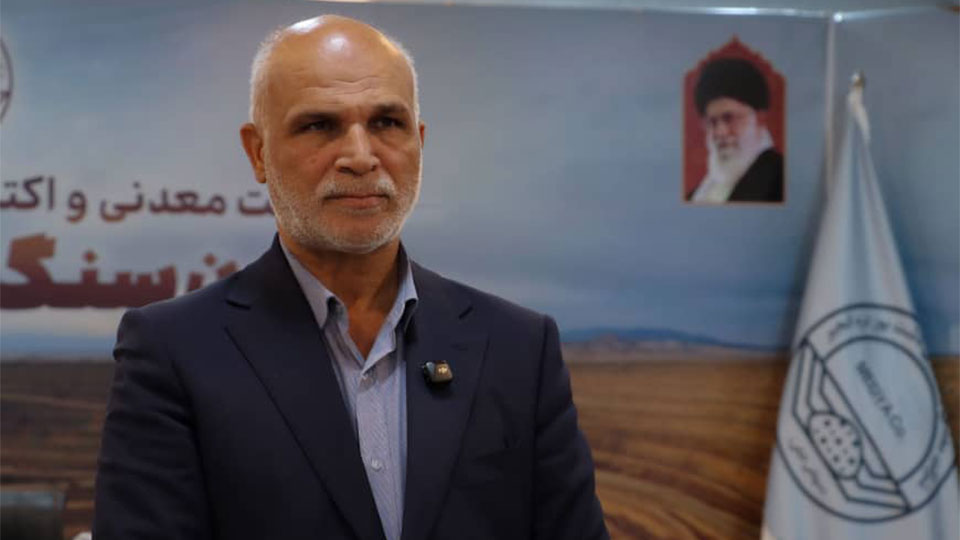
In an interview with Nabz-e Eqtesad, Seyed Masoud Azimi, CEO of Dareh Anjir Asiatic Cheetah Mining and Exploration Company, stated that after years of dealing with sanctions, technological constraints, and infrastructure erosion, Iran’s mining industry has now reached a point where continuing along the traditional path is not only unprofitable but also poses a threat to national resources and the country’s industrial security. He emphasized that this is particularly evident in the iron ore sector, where increasing mining depth has sharply raised operating costs while reducing value added, making the need to redefine the economic model of mining more urgent than ever.
He added that in this context, smart mining is not a choice but a strategic necessity—a necessity that can pull Iran out of the loss cycle and turn it into an effective player in the global market. Therefore, a shift in approach within the mining industry is essential at this critical juncture.
Azimi noted that the structural challenges and rising costs in deep mines signal the end of the era of traditional extraction and the beginning of a technology-driven transformation aimed at enhancing global competitiveness.
Accordingly, Dareh Anjir Asiatic Cheetah Mining and Exploration Company has taken an important step toward reducing mining costs in Iran by moving toward the use of cutting-edge technologies in exploration and extraction.
The CEO stressed that by focusing on process automation and smart systems, the company not only helps increase productivity and reduce operating costs, but also presents a model for technological transformation in the country’s mining industry.
Referring to the current challenges of iron ore extraction, Azimi stated that the reality is that increased mining depth has led to financial decline for companies. He explained that in recent years, iron ore extraction has naturally pushed operations toward greater depths, requiring high-tech equipment—an issue that translates into higher costs and reduced financial efficiency.
He continued: “As miners penetrate deeper layers of the earth, costs related to waste removal, transportation, energy supply, and safety increase. In many cases, these rising costs exceed the value added generated from selling the final product, effectively calling into question the economic viability of extraction.”
The CEO of Dareh Anjir added that the lack of economic justification for iron ore extraction shows that the relationship between mining depth and operating costs represents a breaking point in the traditional mining economic model. Without technological and innovative intervention, continuing extraction under such conditions will not only be unprofitable but may lead to structural losses and waste of national resources.
He further noted that under these circumstances, the final cost of iron and steel rises as raw materials become more expensive, while cost pressures erode the profit margins of small and medium-sized producers.
Azimi stated that this situation is particularly evident in traditional mines lacking technological infrastructure and may even have social consequences for local communities due to mine closures. In fact, declining profitability among small producers weakens the domestic supply chain and increases dependence on imports.
He warned that in the long term, this trend could even threaten the country’s industrial security. Therefore, the response to this challenge lies in the adoption of modern technologies and the smartization of mining processes. The use of advanced equipment, smart sensors, mapping drones, automated drilling systems, and geophysical data analysis can significantly reduce operating costs and markedly increase productivity.
He emphasized that modern technologies are an effective tool for improving the economic efficiency of mining under current conditions. However, implementing these solutions requires digital infrastructure, substantial initial investment, and the training of specialized human resources—factors that must be seriously considered in national mining policy.
Drawing on the experience of many major mines around the world, Azimi noted that smart mining not only reduces fuel consumption and improves safety coverage, but also enables targeted extraction with minimal waste. These technologies increase accuracy in reserve identification and optimize extraction routes, thereby enhancing final product value and restoring profitability to acceptable levels.
He added that from an environmental perspective, these technologies also reduce waste and energy consumption, leading to greater sustainability and a smaller ecological footprint for the mining industry—an issue of growing importance in relation to global standards.
The CEO of Dareh Anjir emphasized the importance of learning from the experiences of countries such as China, France, and the Netherlands, which have long been on the path toward smart mining. He explained that China, as one of the leaders in this field, uses advanced technologies even in underground and underwater mines. In some forested or marine areas, extraction operations are carried out with minimal environmental damage and maximum efficiency through the use of drilling robots and remote-control systems.
“These experiences show that smart mining is not merely a technological trend, but a national policy,” he said. “Countries that embarked on this path earlier now hold decisive positions in global markets. Dareh Anjir Asiatic Cheetah Mining and Exploration Company is also designing its smart mining operations by drawing inspiration from and utilizing state-of-the-art technologies.”
Increasing Productivity through Smart Operations at D19
Azimi stated that given the unique characteristics of Dareh Anjir Asiatic Cheetah Mining and Exploration Company in Iran’s central plateau, the use of technology is not only a tool for cost reduction, but also a driver of increased safety, sustainability, and profitability in Iran’s mining industry. He described smart mining as a survival strategy, noting that operational safety, reduced human risk, and environmental sustainability are the three main pillars of the future of mining—pillars that cannot be achieved without technology.
He added that considering the impact of smartization on competitiveness and profitability, the company has moved decisively toward adopting modern technologies. However, this path requires targeted investment and workforce training.
Azimi emphasized the need for synergy among the government, private sector, universities, and technology institutions to strengthen smart mining through an innovation ecosystem. Given the technological expertise within Dareh Anjir Asiatic Cheetah Mining and Exploration Company, he expressed confidence that Iran’s iron ore mines can not only overcome the looming crisis but also become influential players in the global market.
In conclusion, Azimi stated that the future of mining lies in the hands of technology, stressing that Iran must pursue this path with courage and planning. He noted that courage and planning are two key elements that must be institutionalized in the country’s mining policies, concluding: “The future of Iran’s mining industry will not be shaped in the depths of the earth, but in the depths of digital transformation.”